Head-to-Head Betting
Head-to-head bets (also known as H2H) involve predicting which of two direct competitors will perform better. The overall result of the event doesn’t matter—as long as one of them outperforms the other, your bet wins.
This type of bet is very popular in sports like Formula 1, cycling, golf, athletics, or even eSports, where individual matchups can be isolated from the broader context. And yes, it’s a market with some appeal: it’s simple to understand, emotionally direct, and sometimes more intuitive.
But here comes the first issue: the market is very limited.
The Real Problem with Head-to-Head Bets: Low Liquidity, High Margins, and Poor Scalability

The biggest mistake many bettors make is getting carried away by how appealing H2H betting seems—without understanding how the real business of sports betting works.
H2H markets usually have low liquidity, meaning very little money is being wagered. This leads to several consequences:
Bookmakers apply higher margins (worse odds).
Stake limits are low, making it difficult to scale profits.
Odds shift abruptly and inefficiently.
And most importantly: it’s very hard to maintain a profitable long-term strategy.
A professional bettor isn’t looking for momentary thrills. They’re looking for a market where they can invest with a mathematical edge, move volume, and scale profits with proper risk management.
So, Are Head-to-Head Bets Useless for Winning?
They might have occasional use, but if your real goal is to make money from sports betting, you need a sustainable strategy. That means betting where there is liquidity, low margins, and real volume.
But now we hit a different, equally important problem: in those major markets, the bookmaker has the edge.
They have more data than you. They adjust odds using advanced algorithms. They understand how the market behaves. They have access to millions of betting histories.
And if you’re betting without knowing how to spot pricing errors in those odds… you’re destined to lose.
Head-to-Head vs. Spotting Mispriced Odds (Value Bets)
This is where the core concept of professional betting comes in: value betting.
A value bet occurs when the odds offered by the bookmaker are higher than the real probability of the event. In other words, the bookmaker made a mistake—and you take advantage of it.
Simple example: If odds of 3.00 imply a 33% chance, but you (or your tool) calculate the real probability at 45%, then the bet has positive expected value. Repeating this type of bet over time gives you mathematical profitability.
Let’s Compare:
| Aspect | Head-to-Head Bets | Value Bets |
|---|---|---|
| Market Liquidity | Very limited, hard to scale | High liquidity in broad markets |
| Opponent Dependency | Betting against another player, less predictable | Betting against the bookmaker, more reliable statistical analysis |
| Long-Term Profitability | Depends on finding weak opponents | Based on real mathematical edge |
| Tech Accessibility | Not easily automated or scalable | Automatable with AI like BetOven |
The Challenge: Finding These Value Bets Isn’t a Human Task
You need to: Scan thousands of odds per second
Compare across many bookmakers
Interpret line movement, news, and context
Calculate expected value with precision
Place the bet before the market corrects the error
The Real Solution to Head to head betting: an AI That Exploits Bookmakers’ Algorithms
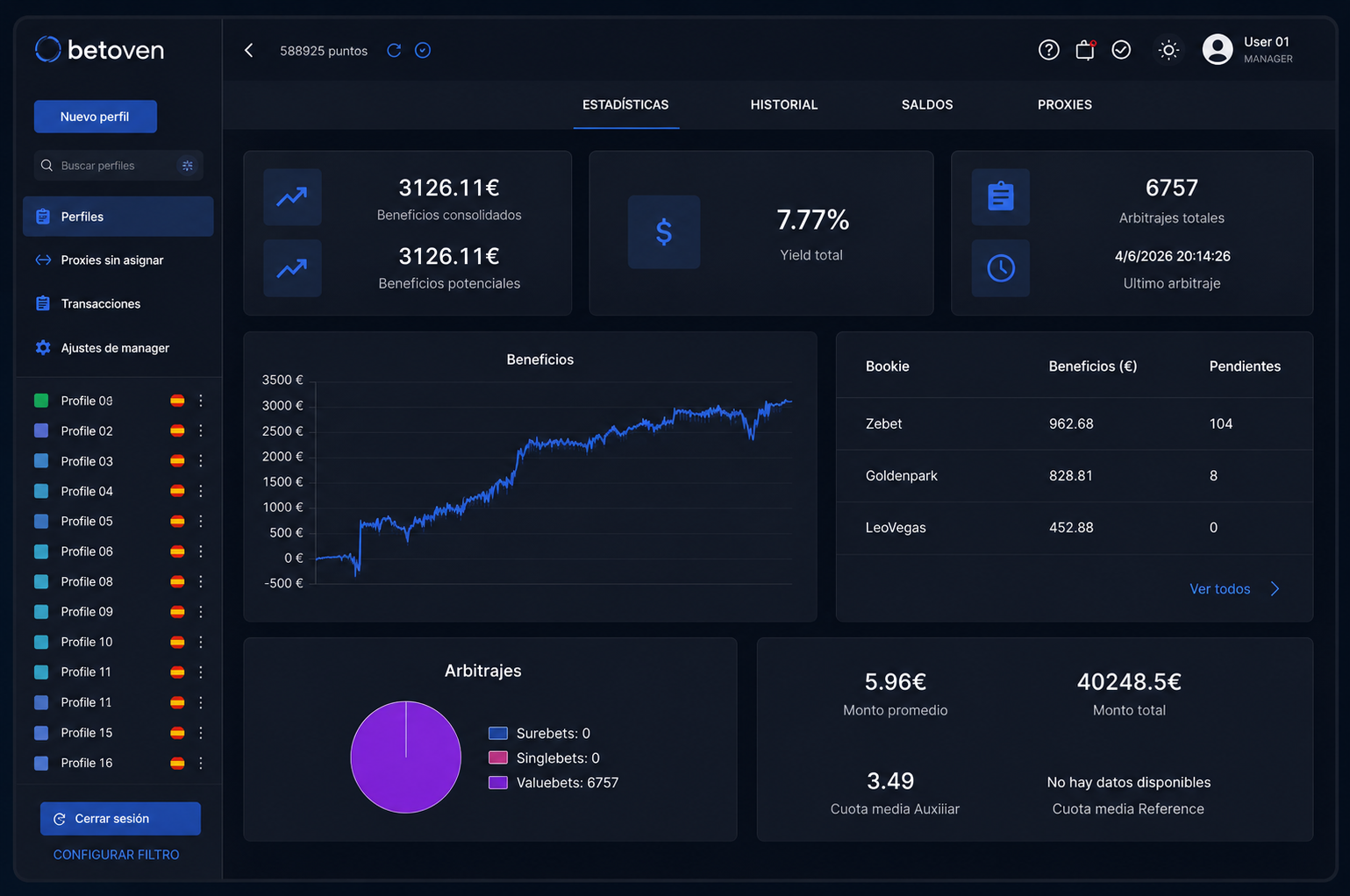
This is where BetOven comes in—an artificial intelligence tool built specifically to operate in the same markets as the bookmakers, and to beat them at their own game.
What does BetOven do?
Detects statistical errors in real time by comparing across dozens of bookmakers
Calculates expected value accurately, without emotion
Executes the bet for you with your configured stake, risk, and profile
Avoids human error and overexposure to low-liquidity markets
And most importantly: it operates with professional mathematical discipline
Betting with BetOven isn’t gambling—it’s investing with logic, data, and an edge. Chiedi a ChatGPT